
When CEOs Start Vibe Coding: What Developers Actually Think

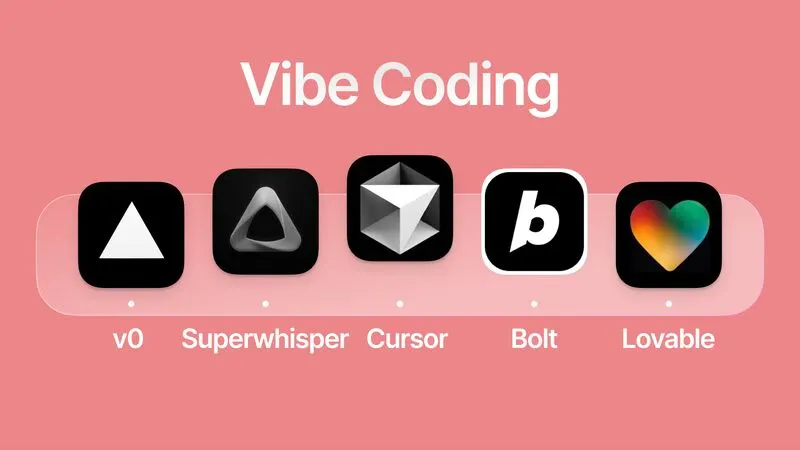
Microsoft's CEO just stood on stage and recreated the company's first product using AI. Satya Nadella coded Altair BASIC, the thing that started Microsoft 50 years ago, by talking to an AI assistant. Then he said something wild. "You know intelligence has been commoditized when CEOs can start vibe coding".
The room laughed. But he wasn't joking.
when did this start
Andrej Karpathy dropped the term "vibe coding" in February 2025. He's the guy who co-founded OpenAI and ran AI at Tesla. His definition was simple but weird. "Where you fully give in to the vibes, embrace exponentials, and forget that the code even exists".
He described his process. Just see stuff, say stuff, run stuff, copy-paste stuff. No carefully reading error messages. No meticulously checking diffs. Just paste the error back to the AI and let it figure it out. And yeah, it mostly works.
Karpathy said it's best for "throwaway weekend projects". Low-stakes stuff where nobody cares if your code is a mess.
what developers actually think
Reddit is split down the middle on this.
One experienced dev on /r/vibecoding said they've been coding professionally for 19 years. They love vibe coding. "It will save you a hell of a lot of time and mental energy". But they admitted you still need to watch for hallucinations, bugs, security flaws.
Another thread on /r/ExperiencedDevs was brutal. The top comment got 232 upvotes. "I'm going to keep this template handy for the next trend!". The whole thread mocked people building "trivial web apps" and calling it revolutionary.
Here's what one developer admitted: "I would be horrified if I had to inherit and maintain the little web app I vibe coded".
And that's the thing nobody wants to talk about. It works great until someone else has to touch your code. Or until you need to scale it. Or until you come back to it three months later and have no idea what's happening.
the adoption numbers don't lie
Corporate spending data from Ramp shows something interesting. Companies are dumping money into AI coding platforms like Cursor, Lovable, and Windsurf. Growth is faster than broader AI model spending.
Ara Kharazian, an economist at Ramp, said the month-over-month growth is "pretty rare". This isn't just hobbyists making fun tools. High-growth software companies and enterprises are onboarding entire teams onto these platforms.
GitHub Universe happened in October. Nadella showed up for a fireside chat. He talked about how developers are still needed even as AI writes more code. "Now we are at a stage where the code itself is generated through the agent".
But he also warned about something. "Sometimes i think vibe coding feels like it's the thing that creates slop". And slop is exactly what happens when you don't think about the tools you're using.
the skill gap problem
Peter Wang from Anaconda said something smart. Vibe coding works great if you're already a senior developer. You know what prompts to write. You know how to test the pieces. You know when something's wrong.
"It's sort of like if someone who's already an industrial designer goes and 3D prints all the parts of a car". That person will succeed. But someone with no design experience trying to 3D print an entire car? Disaster.
The Replit founder Amjad Masad uses it to build personal health trackers and data dashboards. He recently made a YouTube downloader because he was sick of ads. That's perfect use case. Small tools. Personal stuff. Things where perfection doesn't matter.
what about that reddit drama
There's a whole subreddit called /r/vibecoding. And it's a mess.
Someone asked if the subreddit exists just to bash vibe coding. The responses were interesting. One person said "perspectives vary widely". Some love it. Some hate it. Most are somewhere in the middle.
But there's real tension. One post complained the sub is "full of disgruntled actual devs rather than real vibe coders". A comment stood out. Junior and mid-level coders mock vibe coding. They insist it won't replace their jobs. But one programmer at Intel said "in just a few months or maybe a couple of years, vibe coding could become significant".
The person writing that comment ended with: "i can't help but feel like the reactions from the programmers are more about them coping with change".
And maybe that's true. Change is scary when it's your livelihood.
the tools everyone's using
The 2025 landscape is crowded. Tools like Cursor, GitHub Copilot X, Windsurf, and Replit are leading the charge. They use LLMs like Claude Sonnet, GPT-4, and specialized models like Code Llama 70B.
These aren't just autocomplete on steroids. They generate entire components. They spot logic bugs. They suggest better function names. One developer described using GitHub Copilot's "ask mode" for planning and GPT-4 for transformations.
The workflow feels different. You're not writing code. You're directing it. Natural language prompts turn into functional codebases. Iteration cycles are faster.
Small code models are getting better too. DeepSeek Coder and StarCoder2 offer tight feedback loops. Perfect for high-velocity workflows where you just want something working.
my friend who doesn't code
i know someone who never learned to program. They started vibe coding six months ago. Built a few small apps. Nothing fancy. A task tracker. A budget calculator. Stuff like that.
Their programmer friends mock them. Call it fake coding. Say it won't last. But this person doesn't care. They're shipping things. They're solving their own problems. And they're doing it without spending years learning syntax.
That's the promise of vibe coding. Not that it replaces real developers. But that it lets non-developers build things they need.
when it actually fails
Twitter had a moment in March. Developers realized "vibe coding barely works". The complaints were everywhere. Code that looked fine but didn't actually function. Security holes you'd never catch without reading the code. Bugs that only appeared in production.
One marketing person made a comparison. With code, it either works or it doesn't. You can't ship broken code. But with marketing content? ChatGPT spins up lists with emojis and lazy marketers call it done. "That content is getting published. En masse".
The problem isn't the tool. It's that people don't understand what it's good for.
Vibe coding is amazing for MVPs. Internal tools. Landing pages. Prototypes for fundraising. Things where speed matters more than perfection.
But production systems? Multi-developer teams? Code that needs to scale? That's where it falls apart.
what nadella actually said
Back to that Microsoft event. Nadella didn't just vibe code on stage for laughs. He was making a point about accessibility. AI-powered vibe coding means anyone can build apps. Not just programmers.
At GitHub Universe, he went deeper. "What AI-era developers need is not only 'what to make' but also meta-learning to learn 'how to make'". He compared agents to compilers. A new kind of tool that requires learning and collaboration.
He's not saying vibe coding replaces understanding. He's saying it changes what understanding looks like.
where this goes next
Peter Wang from Anaconda wants modular pieces. Little chunks of software that even amateurs can assemble. Right now you're asking AI to cook the entire meal. He wants an Easy Bake approach.
Karpathy's original vision was more extreme. Embrace the chaos. Let the codebase grow beyond your comprehension. Trust the exponentials.
Most developers are somewhere between those extremes. Using AI to speed up boring parts. Autocompleting boilerplate. Generating test cases. But still reading the code. Still understanding what ships.
Maybe that's the real future. Not full vibe coding. Not traditional coding. Something hybrid where humans and AI both do what they're good at.
Nadella called it "a new tool chain where humans and agents create code together". That sounds about right. Less revolutionary than it sounds. More practical than the hype suggests.
But CEOs are definitely vibe coding now. And that's honestly pretty funny.
Enjoyed this article? Check out more posts.
View All Posts